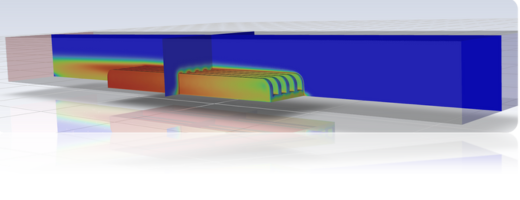
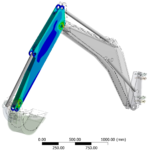
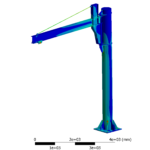
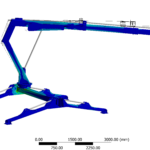
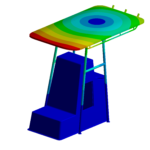
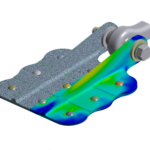
Structural analysis and numerical simulation are essential tools in the design and development of mechanical systems and assemblies. From the initial stages, where they confirm the feasibility and potential of the system to meet its objectives, right through to the final stages of validation and certification.
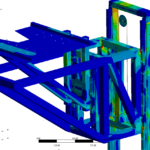
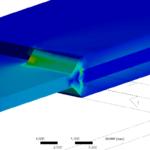
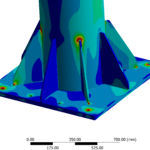
The robustness of the results depends on the quality of the assumptions made during the mechanical analysis, as well as the consideration of phenomena that the system is subjected to or may be subjected to. At Saïna, we work with ANSYS and have the experience and knowledge to cover a wide range of phenomena, both theoretically and practically. Below are a few examples of our studies.
Numerical simulation and mechanical calculation
A tool for the entire development process
Preliminary study, concept and feasibility
Structural analysis and numerical simulation of mechanical structures enable the preliminary sizing of components and assemblies.
This activity is very important in that it provides designers with confidence in their technical approach and in their manufacturing techniques (machining, sheet metal work, casting) and assembly methods (bolted, welded, riveted).
These studies also make it possible to determine whether the requirements in terms of weight, stiffness and cost are achievable.
Development and optimisation
During the product development phase, numerical simulation and structural analysis enable the design to evolve from the preliminary study stage into a robust system that meets the required safety margins, reduces weight and optimises costs.
During this phase, the various conservative assumptions are removed and the modelling becomes increasingly detailed.
Validation, calculation notes and certification
This final stage involves validating the design and generally results in a design calculation. This document summarises all the design assumptions, materials and connections.
The most critical safety margins are presented so that certification bodies can verify that all strength requirements are met.
Safety margins and safety factors depend on the sector of activity and the type of use.
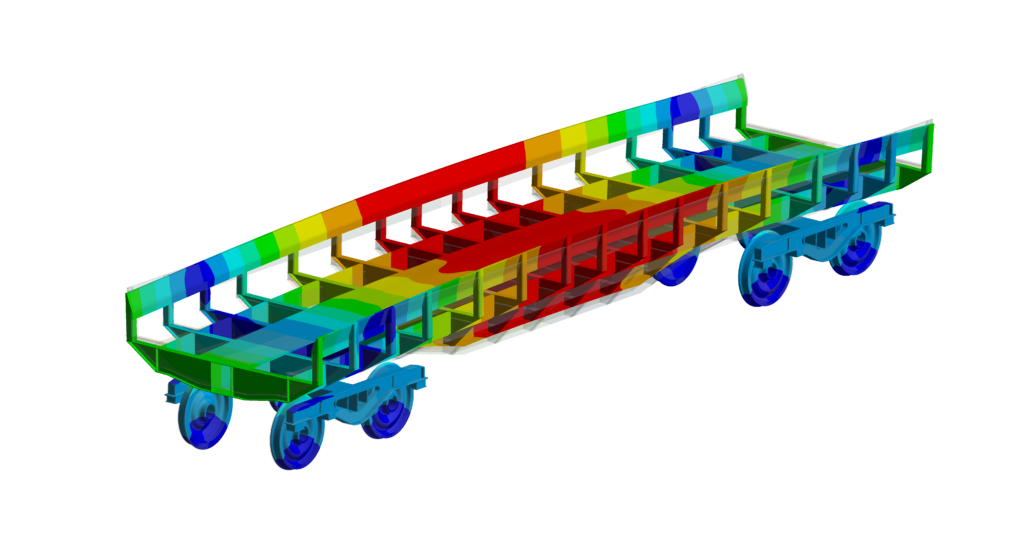
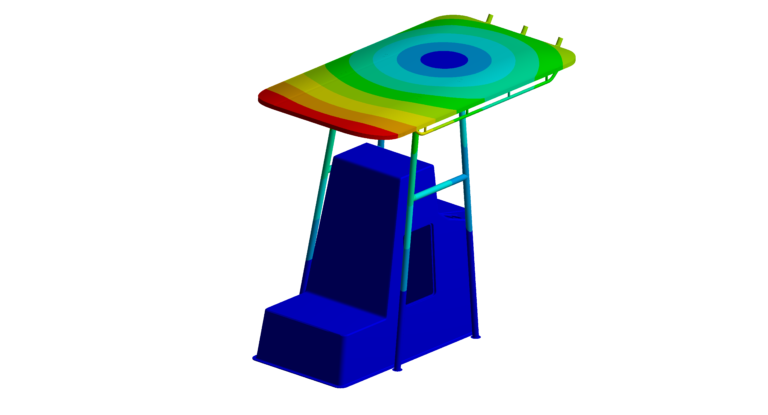
Vibration or modal analysis is applied to all validation processes.
From a “numerical simulation” perspective, these results enable us to validate our data input and confirm that the various connections are functioning correctly. From a ‘mechanical’ perspective, the natural modes identified by this analysis help to prevent structural failure caused by resonance effects.
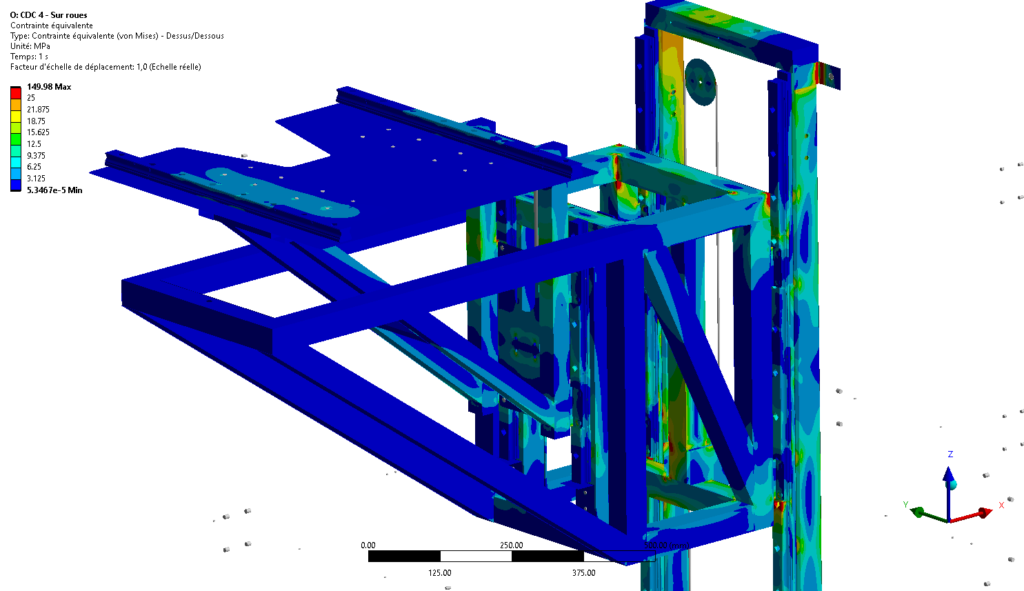
Static analysis
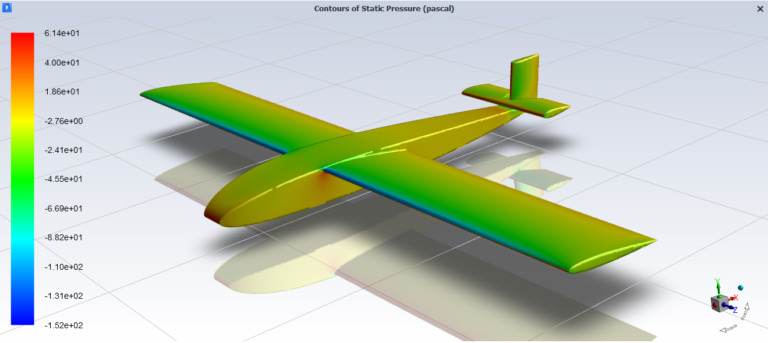
Most structural design problems can be reduced to a static analysis. Its main objective is to analyse the strength of a structure. In doing so, it is assumed that the forces acting on the structure are time-independent.
The loads include forces, moments, pressure, acceleration, etc.
Buckling analysis
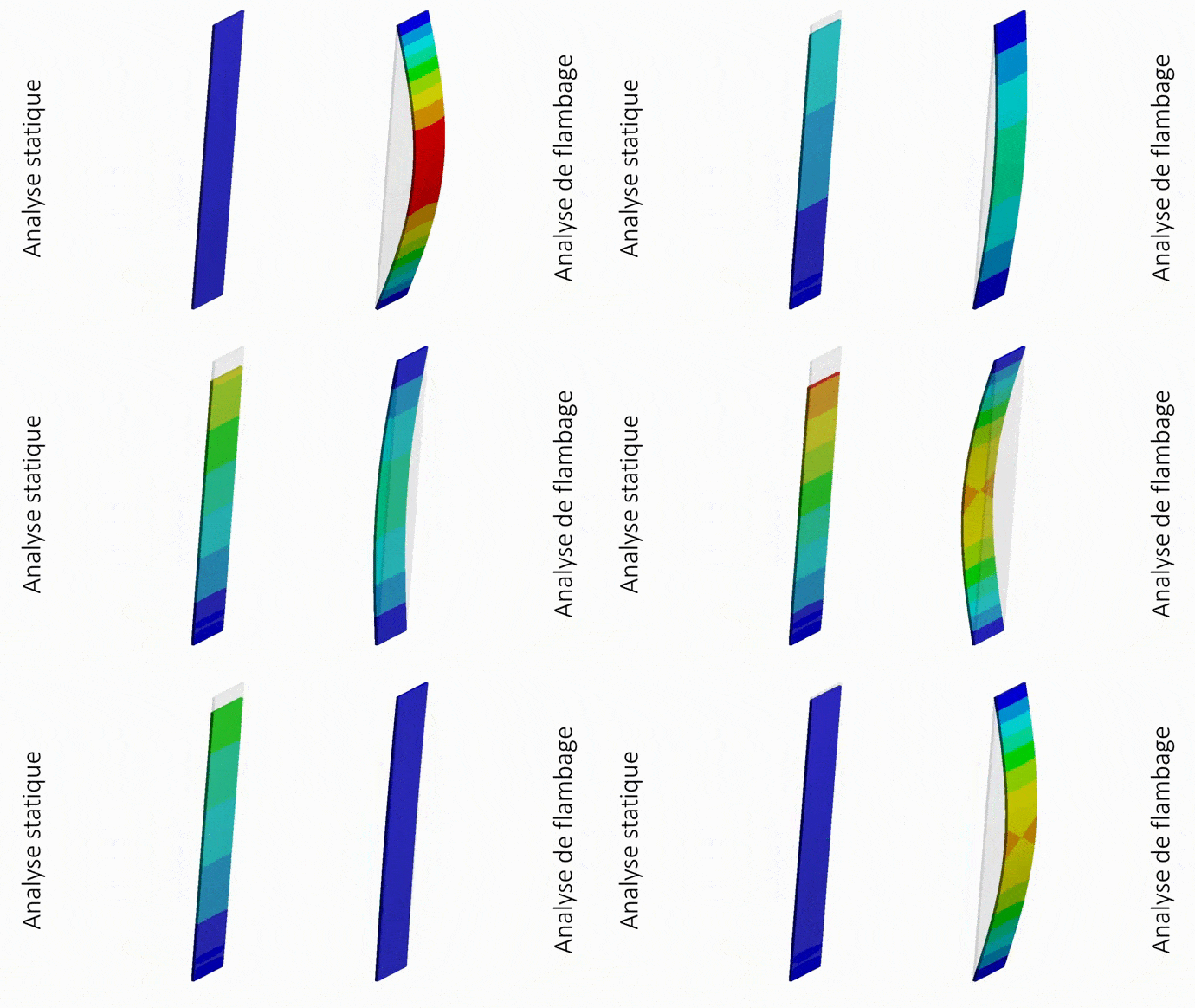
Buckling is a form of instability. When buckling occurs, the structure loses its rigidity.
This instability is not detected during a static analysis under the same load (see illustration on the left). A specific analysis must be carried out, either through a buckling analysis or through a static analysis in which the instability is induced.
Transient analysis
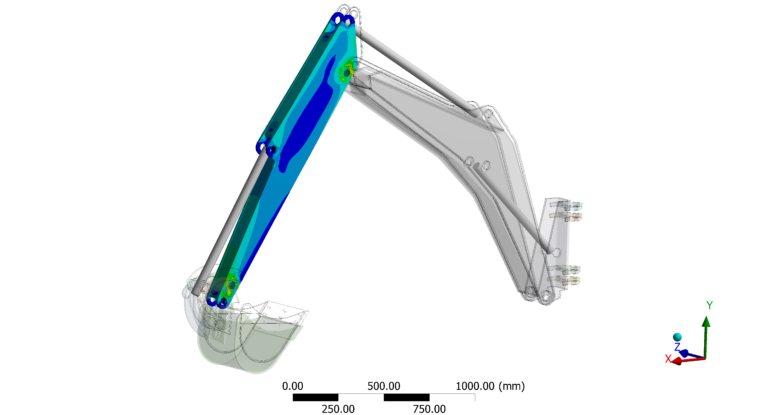
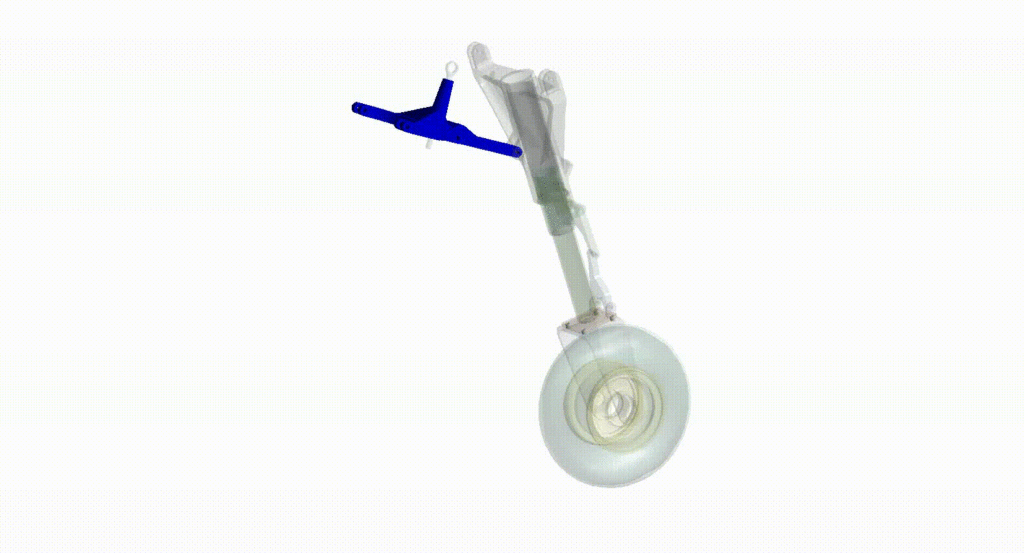
In numerical simulation, transient analysis is similar to static analysis. However, it takes the time factor into account. In other words, it accounts for inertia and kinetic phenomena.
The animation shows the retraction of the nose wheel of a light aircraft.
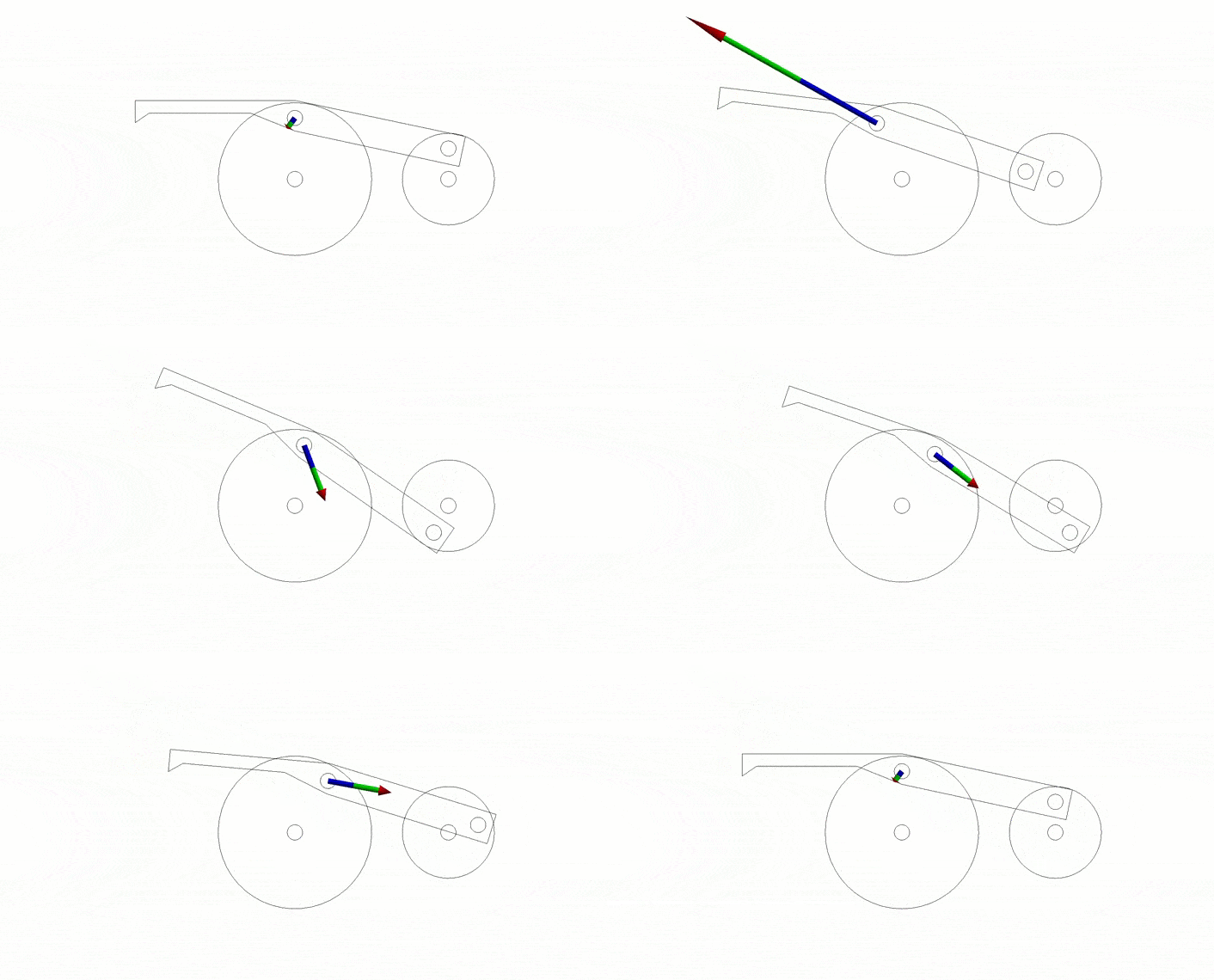
Rigid dynamic analysis
Rigid dynamic analysis enables the kinematics of assemblies to be studied and the resulting forces to be determined. As the materials are treated as rigid, the structural integrity of the assembly cannot be verified through these analyses.
Explicit dynamic analysis
The animation opposite shows the deformation of a shock absorber. This analysis is directly time-dependent. Contact handling is straightforward. It can be used, for example, to analyse the drop resistance of assemblies (such as a mobile phone).
By continuing to browse this website, you consent to the use of cookies or other tracking technologies to provide you with tailored services and offers
Privacy & Cookies Policy
Privacy Overview
This website uses cookies to improve your experience while you navigate through the website. Out of these, the cookies that are categorized as necessary are stored on your browser as they are essential for the working of basic functionalities of the website. We also use third-party cookies that help us analyze and understand how you use this website. These cookies will be stored in your browser only with your consent. You also have the option to opt-out of these cookies. But opting out of some of these cookies may affect your browsing experience.
Necessary cookies are absolutely essential for the website to function properly. This category only includes cookies that ensures basic functionalities and security features of the website. These cookies do not store any personal information.
Any cookies that may not be particularly necessary for the website to function and is used specifically to collect user personal data via analytics, ads, other embedded contents are termed as non-necessary cookies. It is mandatory to procure user consent prior to running these cookies on your website.